Crews riding out today — sweeps & brickwork across the Barrington villagesInsured • Our Own Hands • Mon–Sat, 7 to 7Call (224) 512-7229
Barrington Hills • Tower Lakes • North Barrington • The Village
Horse Country Keeps Its Fences Painted and Its Stone Honest. Chimneys Included.
Out here a property is judged the way a horse is — on soundness, not shine. And nothing tests soundness like an Illinois winter throwing forty freezes at the same brick. We look after the chimneys of the Barrington countryside the way its barns are looked after: gone over each season, mended with the right materials, never let slide. Ring the stable line and the mason himself picks up, Monday through Saturday.
7 to 7A mason on the line, Monday through Saturday
44+Years riding out to hunt-country chimneys
4900+Stacks vetted, swept or rebuilt sound
$149The vetting papers, drawn up on request
The Tack Wall
Eight Disciplines, Schooled in This Yard
Everything on this wall belongs to the house — no subcontracted riders, no borrowed gear. What we hang up, we stand behind, at the price chalked before the first tool comes down.
Sweeping at a Steady Gait
Rotary heads or rods — the flue decides which — taken down the passage in even, unhurried passes until the scope shows bare liner, with the smoke shelf and damper cleaned off by hand at the finish.
Soundness judged the hunt-country way: nothing taken on the seller's word, everything checked against the animal itself. Masonry, flue, crown and cap each get their look, and the look is free.
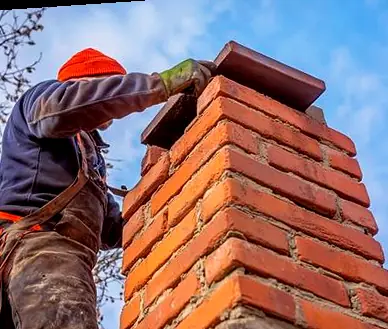
A stack the freeze has beaten gets stripped to courses that still hold, then raised again the old way — full beds, true lines, and a crown proportioned to carry snow load and shrug off the melt.
Forty freeze-thaw swings a winter is the local arithmetic, and shallow patchwork loses to it every time. Failed joints come out to solid depth and go back full, in mortar blended to the original wall.
The crown gets dressed sound first — no cap saves a crumbling seat — then a stainless cap with screening goes on, fastened to hold through gale, ice and the raccoon that fancies your flue in February.
Tack that almost fits galls the horse; flashing that almost fits soaks the framing. Where roof meets masonry we find the true entry point, then work stepped and counter pieces into the joints themselves.
Where the clay tile has split — or a big old flue never had any — a stainless liner goes down in one continuous piece, matched to the appliance at the bottom and insulated where the standard calls it.
Before the season opens, the hearth gets its grooming: shifted firebrick reset in refractory, the smoke chamber trued for a clean pull, the damper worked until it swings the way a gate should.
A Horse Refuses a Bad Jump. A Chimney Refuses More Quietly.
Any rider knows a refusal is information. These seven are how a chimney balks — and each one is worth pulling up for before the season asks more of it.
Smoke turning back at the hearthThe draft balking — something chilled, pinched or sitting in the way upstream.
Sand on the firebox floorJoints giving up their mortar grain by grain, somewhere out of sight.
White lather on the brickworkEfflorescence — moisture sweating minerals out through the face.
Brick flakes in the garden bedSpalling — the freeze prying faces off the stack and dropping the evidence below.
A tarry shine up the flueGlazed creosote — the grade that burns, and brushing alone won't shift it.
Rust weeping at the rooflineFlashing past its useful years — the photograph beside shows the full retirement.
Nobody remembers the last lookAn unvetted animal is an unknown one. The look costs nothing here.
The stable answers, Monday into SaturdayMetal this far gone stopped keeping water out a while back. Tell the mason on the line what you're seeing — he's there 7 to 7 every day except Sunday — and you'll know by the end of the call whether yours can wait for spring. Weekend messages get the first ride out Monday.
The Gaits
Four Gaits, Ridden in Order Every Time
A schooled horse doesn't skip from walk to gallop, and a schooled trade doesn't skip from hello to invoice. The order below is fixed.
1
Call the Stable
The mason answers between 7 and 7, Monday through Saturday. Describe the misbehavior in your own words and set the day.
2
The Vetting
The full soundness exam, free of any fee, with the verdict given to your face in plain country English.
3
Board Prices
Repairs written up line by line, urgent separated from advisable, every figure fixed before you nod.
4
Show-Ready Finish
The work done to the stable standard, the grounds left groomed, and the guarantee handed over on paper.
Before the First Frost
The First Hard Frost Never Sends Word Ahead. Your Chimney Can Be Ready Anyway.
Around here the cold arrives overnight, sometime in October, without consulting anyone's calendar. The households that vetted their flues in September light up that same evening and think nothing of it. Joining them takes one call, and the looking still costs nothing at all.
Pinned from recent rounds — flues brushed bright, crowns recut, seams remade in new metal and hearths brought back to working order across the villages.
Flue brushed bright — Tower LakesJoints packed full — Barrington HillsTopped out sound — North BarringtonSeam remade — Deer ParkVetted sound — WaucondaRefusal answered — Port BarringtonLiner route walked — Fox River GroveRaised on full beds — InvernessHearth groomed — KildeerUpper work squared away — South Barrington
Hunt Country
Riding Out to All the Barringtons, and a Little Past Them
The stable sits on Pepper Rd in Lake Barrington; the rounds cover the villages, the Hills, and the towns across the Fox.
Lake Barrington
Barrington Village
North Barrington
South Barrington
Barrington Hills
Port Barrington
Tower Lakes
Lake Barrington Shores
Fox River Grove
Wauconda
Island Lake
Deer Park
Kildeer
Hawthorn Woods
Inverness
Crystal Lake
Past the fence line? Call (224) 512-7229 — the rounds stretch further than the signpost says.
Asked at the Gate
What Owners Ask Before We Saddle Up
A vetting for nothing? Horse people know better than that.
Fair suspicion — and still, free rein means free. A mason examines the firebox with its throat and damper, works his way along the flue, then takes the weather side: crown, cap, flashing, the brick that faces the open country. You get the verdict spoken plainly before he's off the property, and nothing is owed for any of it. The two ways money enters: you ask for the vetting papers — the findings written out with photographs and line-priced repairs, $149 — or you approve actual work at figures shown to you first. Decline both and the visit stays what it was: free.
The chimney acts up on a Sunday — then what?
The honest version: Sunday the stable is dark, and the machine takes your message. We could dress that up; we won't. Monday through Saturday a mason answers this number himself from 7 to 7, and whoever left word on the weekend hears back before Monday's first appointment rolls out. Safety, though, has no off day — fire showing anywhere it shouldn't, or the faintest suggestion of carbon monoxide, and the drill is absolute: every person and animal out of the building, 911 dialed first, our number saved for the morning after.
What does an Illinois winter really do to brick?
They work it like a bad farrier works a hoof — one freeze at a time. Around here water gets into the brick face during a January thaw, freezes again by nightfall, and pries. Do that forty times a winter and mortar faces pop off in flakes, a process the trade calls spalling; you'll spot the shed pieces in the flowerbed before you spot the damage overhead. Chimneys on the open side of a property — the ones taking the northwest wind straight off the fields — go first. The countermeasures are unglamorous and effective: mortar kept packed to the face, a crown pitched to throw the melt, a repellent that lets the wall breathe, and one good look every fall before the cycle starts again.
Ours is a big fieldstone chimney with several flues. Can you handle it?
That's the local specialty. Estate chimneys around the Barrington countryside run broad — fieldstone and oversized brick, two, three, sometimes four flues sharing one stack above the great room, the study and the odd outdoor kitchen. Each flue gets treated as its own animal: swept on its own condition, capped to its own draft, lined to its own appliance. The stonework itself asks for a different hand than brick — mortar mixed softer to move with the stone, joints packed rather than struck — and rushing that work is how field chimneys end up scarred. Ours aren't.
How often should the flues be swept out here?
Match the schedule to the workload, the way you'd condition any working animal. A fireplace that carries a full Barrington winter — and out here the season runs long — earns a sweeping every year, spring or early fall as you like. A flue that stood cold since March wants checking before anything is lit under it, because open country means wildlife, and wildlife loves a quiet chimney. Heating-appliance flues run yearly on their own rotation; what collects in them is corrosive, invisible from the hearth, and reliably worse than the homeowner guessed.
We're listing the property and the inspection turned up chimney notes. How fast can you move?
Fast enough for a closing calendar. Estate sales out here rarely leave slack, so a flagged chimney gets the free vetting scheduled within days, a camera pass when the dispute needs pictures instead of opinions, and — where paper matters — the $149 vetting papers delivered in time to sit on the negotiating table: written findings, photographs, each repair priced on its own line. Buyers stop haggling with adjectives once the numbers are in front of everyone.
Who actually rides out, and are they insured?
Men on our payroll, full stop — this outfit doesn't lease its reputation to whoever answered a posting last week. Every hand passed a background check before his first drive out, and both policies — general liability and workers' compensation — ride along on every visit. Ask when booking and the certificate of insurance reaches you before the crew does. Around property like this, that paper isn't a formality; it's the difference between a professional call and a gamble.
Will sweeping leave soot through the house?
Not the way we run it. Drop cloths go down from the door to the hearth, the fireplace mouth gets sealed under plastic, and a filtered vacuum holds suction on the opening for as long as a brush is moving. Soot travels one direction — into the machine. A straightforward flue takes about an hour, and when the kit is packed the room should look precisely as it did, minus whatever was living in your chimney.
The Pepper Rd Stable
One Number. The Mason Himself. Six Days a Week.
No contact forms, no call center, no promise of a callback that wanders off. The man who answers can judge the job from your description, name a range he'll stand by, and book the visit then and there.
The stable22272 N Pepper Rd, Unit F Lake Barrington, IL 60010
The roundsThe Barrington villages, the Hills, and across the Fox
When the stable answers
Mon – Sat
7 in the morning to 7 at night, the mason himself
Sunday
Dark — the machine keeps your place for Monday
The mason holds this line
Describe It Like You'd Describe a Lame Horse.
Which side favors, when it started, what changed — that's diagnosis, and it works on chimneys too. The smoke that curled wrong last weekend, the grit by the fender, the flakes in the mulch: say what you saw and you'll get a straight read on what it likely is and what it likely runs.